
Is Spinal Decompression Safe?
Understanding the safety profile helps you make a confident decision. Here's what you need to know about risk, side effects, and who this is — and isn't — safe for.
SAFETY
Is Spinal Decompression Safe?
Understanding the safety profile helps you make a confident decision.
The Direct Answer
Yes — When Patients Are Properly Screened and Equipment Is Appropriate
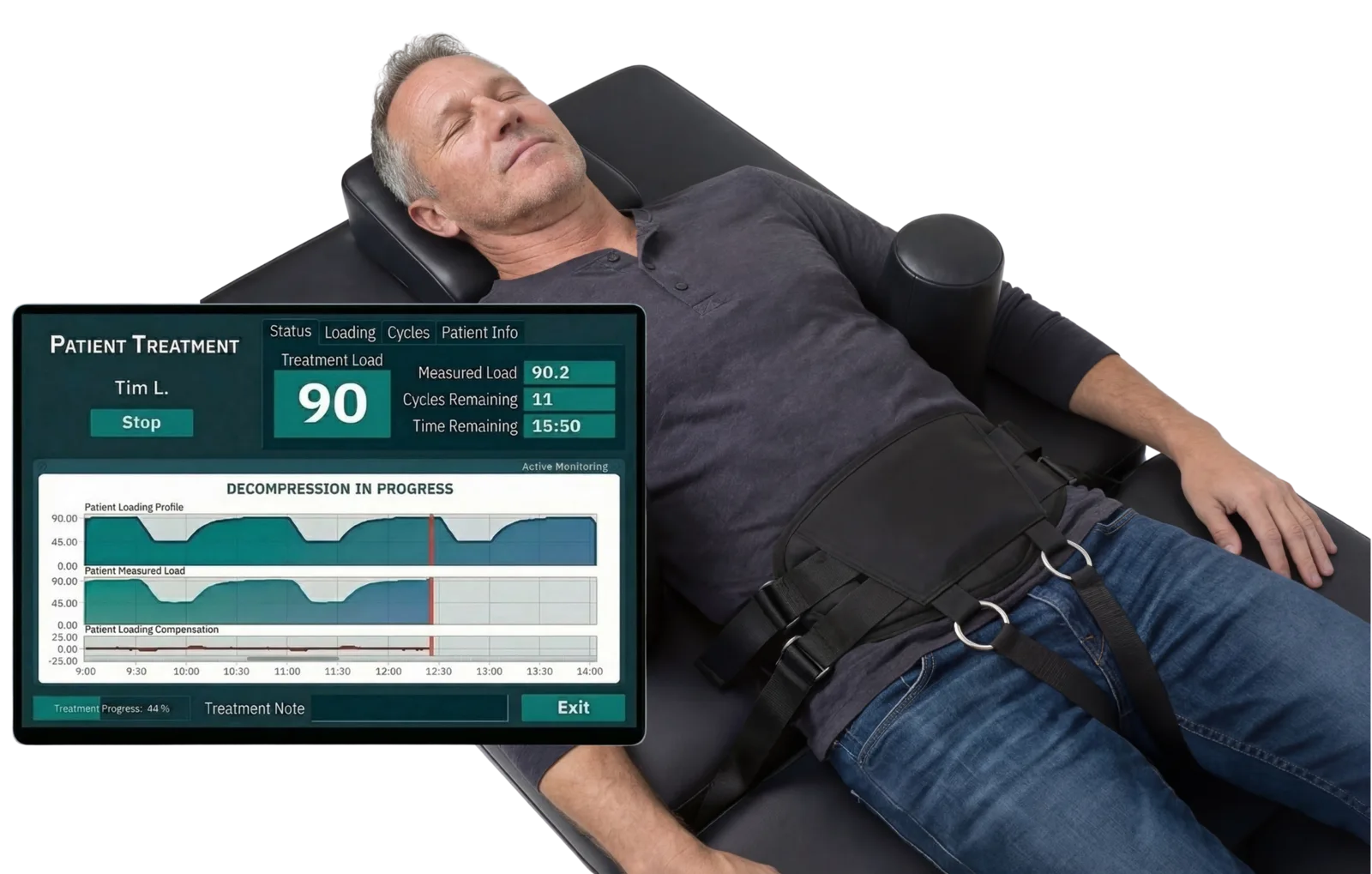
Spinal decompression is a non-invasive intervention. There are no incisions, no needles, no injections, no medication, and no anesthesia. The therapy applies controlled mechanical forces to the spine externally through positioning and computer-guided loading.
The safety profile is favorable — adverse events are rare and typically minor when patients are properly screened, appropriate equipment is used, and established protocols are followed.
But "safe" doesn't mean "safe for everyone." There are specific conditions that make decompression inappropriate or contraindicated. Honest safety communication means telling you when it's not safe, not just reassuring you that it is.

When It's Not Safe
Who Should Not Get Spinal Decompression
Decompression is contraindicated for patients with advanced osteoporosis, spinal fractures or acute trauma, certain spinal tumors or infections, severe spinal instability, pregnancy in most cases, and specific types of spinal hardware or fusion in the treatment area.
Relative contraindications — where decompression may be possible but requires extra caution — include certain post-surgical presentations, advanced degenerative conditions, and patients with metal implants near the treatment area.
This is exactly why professional evaluation is required before treatment begins. A responsible provider assesses whether the therapy is mechanically and clinically appropriate for your specific presentation — not just whether you're willing to pay for it.
"Could this make things worse?"
There's no documented evidence that properly administered decompression causes structural harm when appropriate patients are selected. However, a small percentage of patients experience temporary symptom aggravation during early treatment. This is distinct from making the condition worse — it's a transient response that typically resolves as treatment progresses.
Early Aggravation
Why Some Patients Feel Worse Before They Feel Better
When spinal structures have been compressed for extended periods, the surrounding tissues have adapted to that compressed state. Reducing compression — even therapeutically — changes the mechanical and neurological environment. In some patients, this change temporarily increases nerve irritability before improvement occurs.
The pattern often described is: initial aggravation, gradual reduction, sometimes sudden resolution. Patients who discontinue during the early aggravation phase often conclude the therapy "made things worse" — when they actually stopped before the adaptive process could complete.
This is one reason structured treatment courses are emphasized over single sessions, and why patient communication and expectation-setting are critical. Your provider should prepare you for this possibility, not just hope it doesn't happen.
What to Expect
Recovery Trajectory
Note: Early aggravation does not occur in the majority of patients. Most patients experience gradual, steady improvement from the start. For the minority who do experience it, it is a recognized, temporary response — not a sign of harm — and it typically resolves as treatment progresses.
Equipment Matters for Safety
Why the Machine Matters as Much as the Therapy
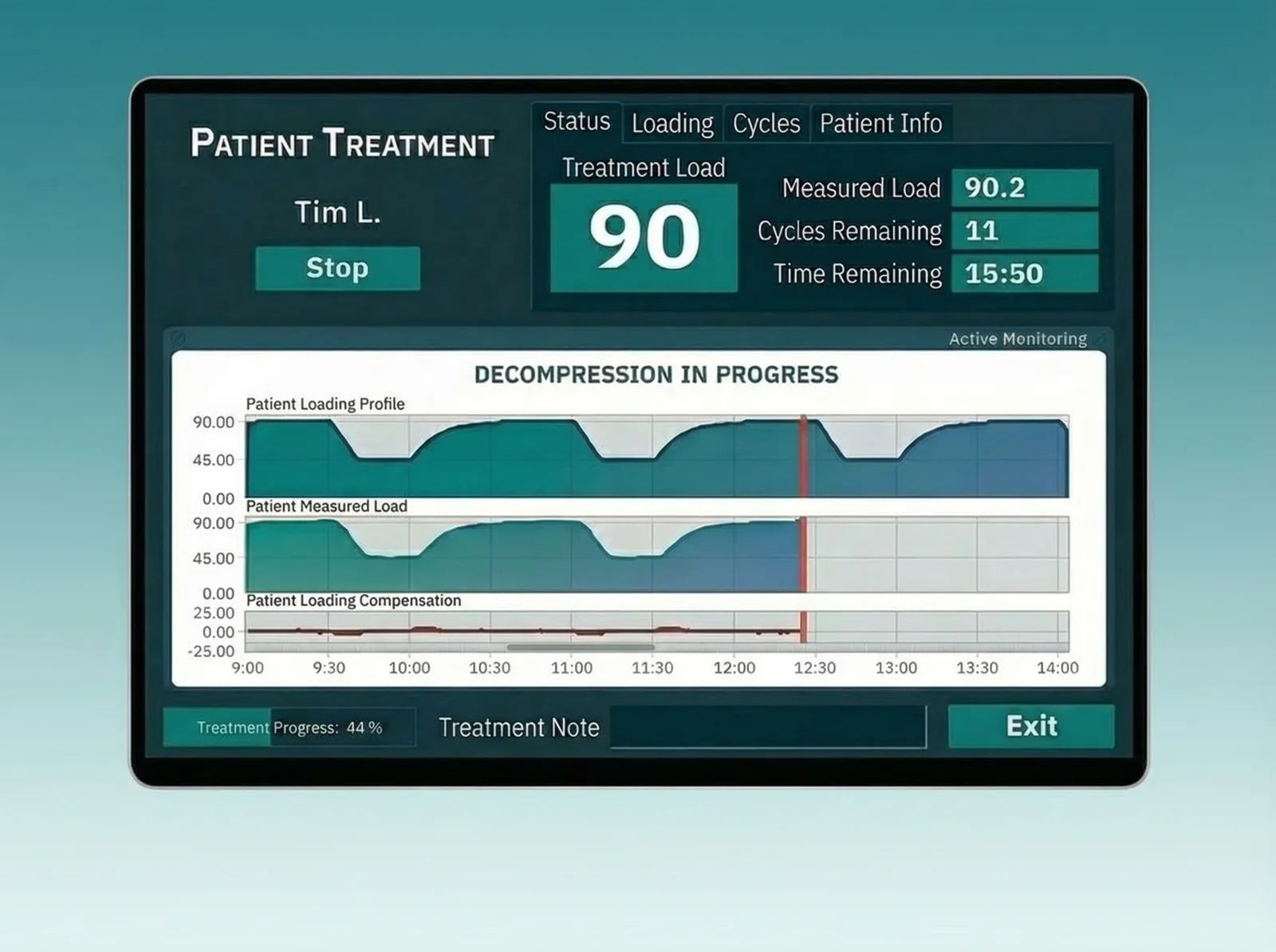
Not all decompression equipment is equal when it comes to safety. The systems used by preferred providers on this platform include real-time biofeedback and patient monitoring that continuously adjust treatment forces based on muscle guarding, reflexive tension, and patient response. These monitoring capabilities aren't optional features — they're integral to the safety profile documented in the published research. Studies validating decompression safety were conducted on this caliber of equipment, not on entry-level tables.
In some systems, if a patient coughs or sneezes during treatment, the machine stops within milliseconds. That level of responsiveness reduces the risk of inappropriate force application and improves patient tolerance.
Basic traction tables marketed as "decompression" may lack these monitoring capabilities. The absence of real-time feedback means force is applied regardless of how the patient's body responds — which increases the risk of discomfort and reduces the precision that makes spine-specific rehabilitation effective.
Non-Invasive. Reversible. Monitored.
Compared to injections that place needles near nerves, or surgery that permanently alters anatomy, spinal decompression's risk profile is significantly lower. No procedure is risk-free — but for appropriately screened patients, this one comes close.
Relative Risk
Safety Compared to Alternatives
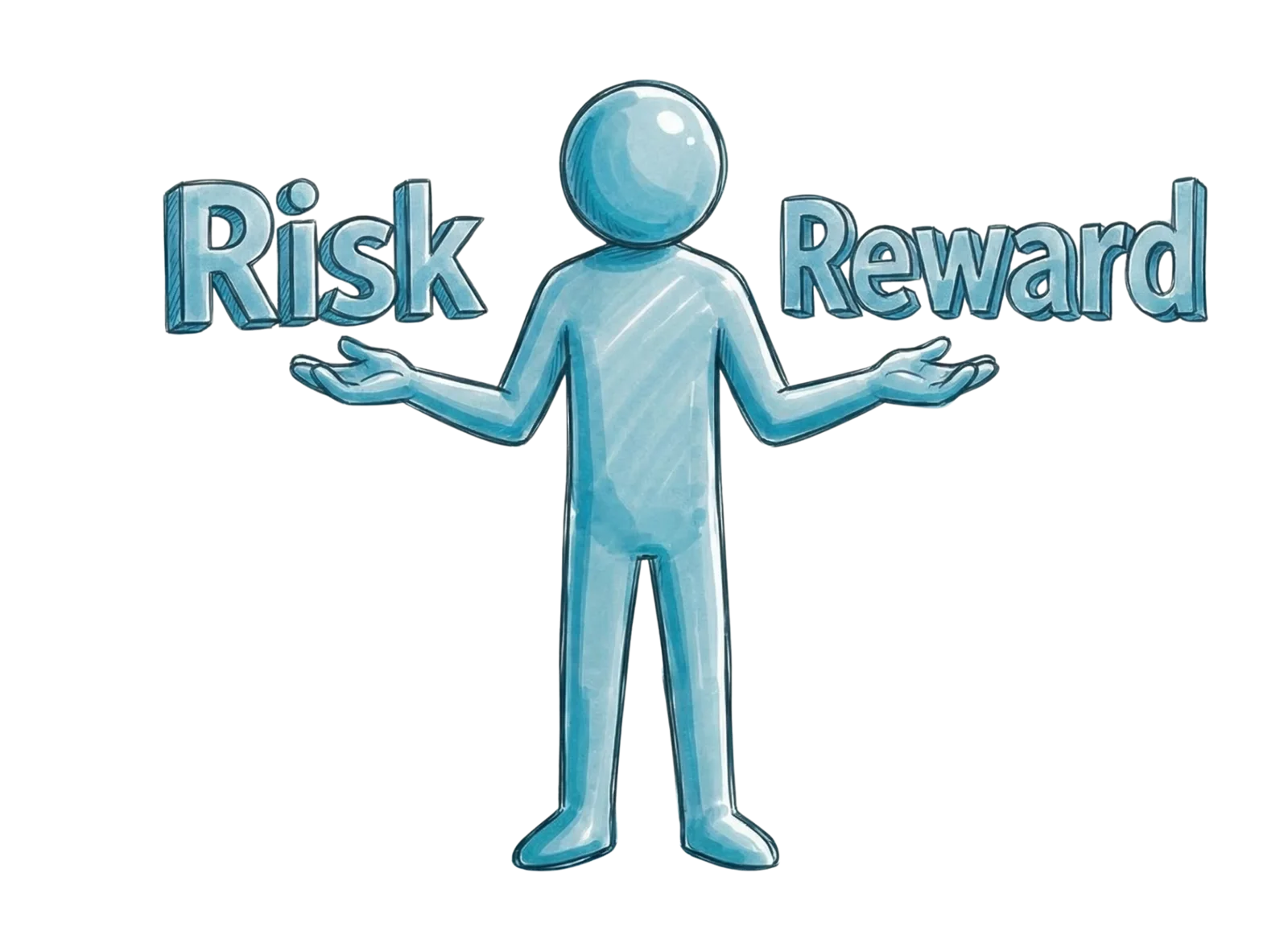
Every medical intervention carries some risk. The question is whether the risk is proportional to the potential benefit and how it compares to alternatives.
Epidural injections involve needle placement near spinal nerves under fluoroscopic guidance. Rare but real risks include infection, nerve damage, and dural puncture. Spinal surgery involves permanent structural modification with risks including failed back surgery syndrome, hardware complications, infection, and adjacent segment disease.
Spinal decompression involves no needles, no incisions, no anesthesia, and no permanent changes. The therapy is fully reversible — if it doesn't produce results, you stop, and nothing has been altered. That reversibility is itself a safety feature that invasive alternatives cannot offer.
Related Pages


Find a Preferred Provider
Enter your zip code to see if a credentialed provider is available near you.
Why choose a preferred provider?Ready to Find Out If You're a Candidate?
Take our quick 3-minute assessment to see if spinal decompression may be appropriate for your situation. It's free, confidential, and takes just a few questions.
Take the AssessmentGet Started
We've got your info!
We don't have a preferred provider in your area just yet, but we'll reach out as soon as one becomes available.