
Spinal Decompression vs. Epidural Injections
Injections are one of the most commonly recommended interventions for spinal pain. Here's how they compare to decompression — and why the choice isn't always either/or.
The Short Answer
They're Solving Different Problems
Epidural steroid injections deliver anti-inflammatory medication directly to the area around irritated nerve roots. The goal is to reduce inflammation and pain signaling — to quiet the nerve so you feel less pain.
Spinal decompression — more accurately described as spine-specific rehabilitation — addresses the mechanical environment causing the irritation in the first place. Through controlled, cyclical loading of the affected segment, the goal is to alter the conditions around the disc and nerve, not just mask the pain signal.
One manages the symptom. The other attempts to influence the source. Both have a role. The question is which your specific situation requires — or whether both are appropriate at different points in your care.
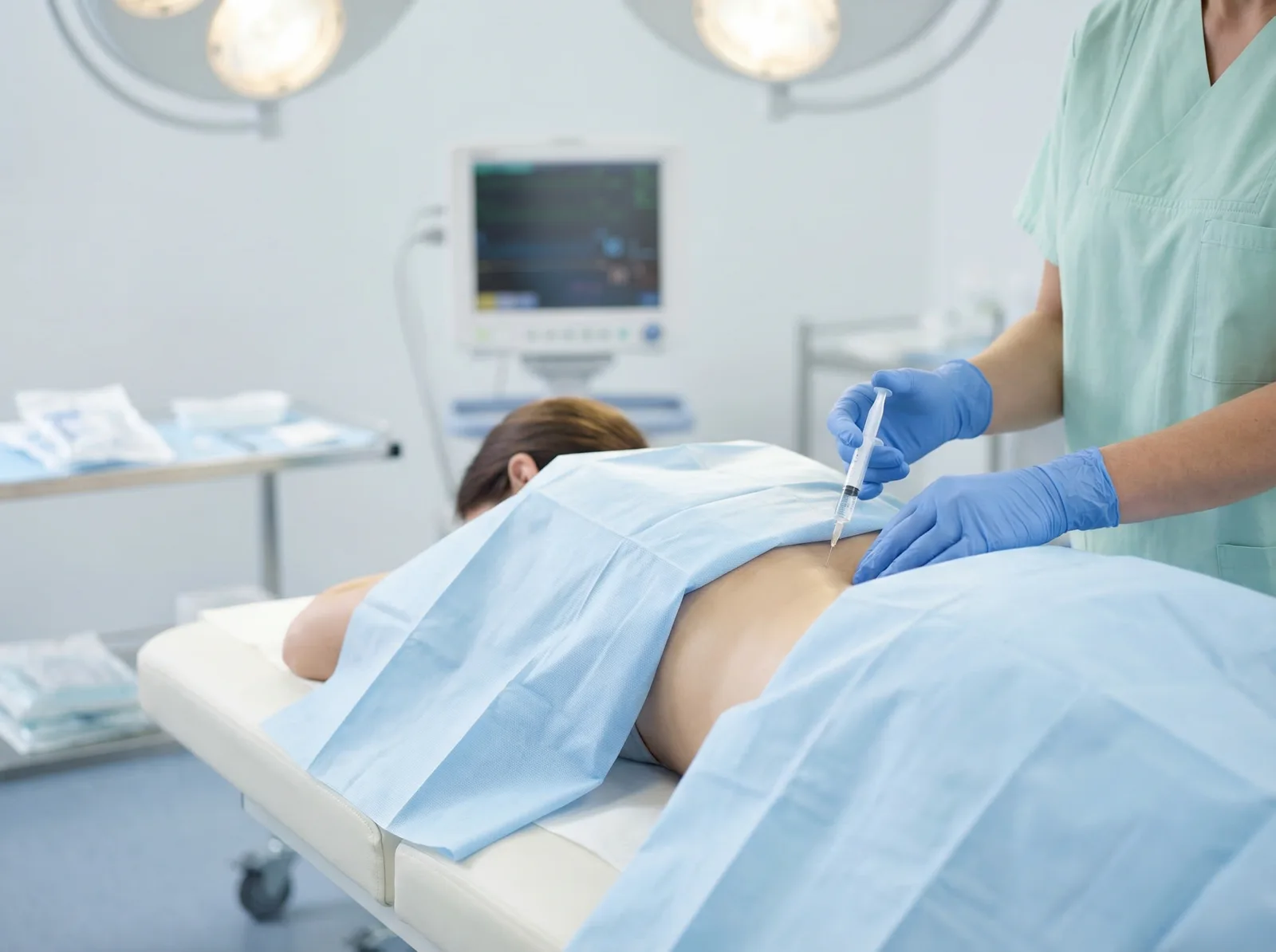
What Injections Do
Inflammation Management — Not Mechanical Correction
Epidural injections are effective at reducing acute inflammation around compressed or irritated nerve roots. For many patients, this provides meaningful — sometimes dramatic — short-term relief. That relief can be a critical window that allows patients to participate in rehabilitation.
However, injections do not alter the mechanical condition causing the nerve irritation. The disc herniation, bulge, or compression that's creating the problem remains unchanged. When the steroid effect wears off — typically weeks to months — the inflammation and symptoms may return if the underlying mechanical issue hasn't been addressed.
This is why many patients describe a cycle: injection provides relief, relief fades, another injection is recommended, eventually the injections stop helping as much. The inflammation keeps returning because the mechanical source hasn't changed.
"My epidural helped for a few months but the pain came back. Should I get another one or try something different?"
If the injection provided temporary relief, that's actually useful information — it confirms an inflammatory component to your pain. But if the relief consistently fades, it may be because the mechanical source of that inflammation hasn't been addressed. Spine-specific rehabilitation targets that mechanical environment directly.
The Mechanical Approach
Addressing the Source, Not Just the Signal
Spine-specific rehabilitation targets the disc segment itself through computer-controlled cyclical loading. Rather than quieting the nerve's pain signal, the goal is to influence the mechanical environment that's irritating the nerve in the first place — bypassing muscle guarding and creating conditions that may support disc nutrition and reduce mechanical pressure on the nerve root. See the full mechanism →
When the mechanical environment changes, the inflammation may resolve because the source of irritation has been addressed — not just chemically suppressed. This is also why decompression requires a structured course of 20–30 sessions rather than a single visit. Mechanical adaptation takes time.
Feature Comparison
Side by Side
| Feature | Epidural Injections | Spinal Decompression |
|---|---|---|
| Mechanism | Delivers anti-inflammatory steroid medication directly to irritated nerve area | Cyclical mechanical loading targeting the disc environment at a specific spinal level |
| What it addresses | Inflammation and pain signaling — the symptom | The mechanical environment causing the irritation — the source |
| Invasiveness | Minimally invasive — needle placement near spinal nerves under fluoroscopic guidance | Non-invasive — no needles, no incisions, no medication, external mechanical forces only |
| Duration of relief | Typically weeks to months — variable, often requires repeat injections | Structured to produce sustained improvement over a 20–30 session course |
| Repeat frequency | Limited — most guidelines recommend no more than 3–4 per year due to steroid effects | Corrective course is finite — maintenance sessions may follow if needed |
| Risk profile | Rare but real risks: infection, nerve damage, dural puncture, steroid side effects | Non-invasive with favorable safety profile — no needle placement near neural structures |
| Insurance coverage | Typically covered with prior authorization | Typically not covered — structured as flat-cost care program |
| Best suited for | Acute inflammatory flares, diagnostic confirmation, bridging to rehabilitation | Identified disc-level problems where mechanical environment needs to change |
Not Either/Or
Sometimes the Right Answer Is Both — At Different Times
For patients with severe acute inflammation, an injection may be the right first step. It can reduce the inflammatory component enough to make the patient comfortable enough to begin spine-specific rehabilitation.
Once the acute inflammation is managed, decompression can address the mechanical source — the disc compression, the loading pattern, the segment-level environment. This sequenced approach uses each intervention for what it does best.
What doesn't make sense is relying on repeated injections without ever addressing the mechanical cause. If you've had two or three rounds of injections and the pain keeps returning, that pattern is telling you something: the inflammation management is working temporarily, but the source hasn't changed.
This is not an argument against injections
Epidural injections are a legitimate medical intervention with an important role in spinal pain management. They can provide critical relief during acute flares and serve as valuable diagnostic tools. This comparison exists to explain why injections alone may not resolve a mechanical problem — and why patients stuck in a cycle of repeat injections may benefit from addressing the mechanical source.
Manage the Signal or Address the Source
Injections quiet the inflammation. Spine-specific rehabilitation targets the mechanical environment causing it. The question isn't which is "better" — it's what your condition requires right now.


Find a Preferred Provider
Enter your zip code to see if a credentialed provider is available near you.
Why choose a preferred provider?Ready to Find Out If You're a Candidate?
Take our quick 3-minute assessment to see if spinal decompression may be appropriate for your situation. It's free, confidential, and takes just a few questions.
Take the AssessmentGet Started
We've got your info!
We don't have a preferred provider in your area just yet, but we'll reach out as soon as one becomes available.