
Spinal Decompression vs. At-Home & Alternative Methods
Inversion tables, traction devices, stretching routines — here's why they're not the same thing and what the differences mean for your results.
The Core Difference
Why Every At-Home Method Hits the Same Wall
Your body has a built-in protective mechanism: when it senses a pulling force on the spine, the paraspinal muscles contract to resist it. This is called the muscle guarding response, and it's the single biggest obstacle to achieving true decompression.
Inversion tables, conventional traction devices, stretching routines, and consumer "decompression" gadgets all trigger this same reflex. The muscles fight the pull, and the targeted spinal segment never actually experiences meaningful unloading.
Clinical decompression systems are specifically engineered to bypass this response. They use cyclical loading patterns — pull, partial release, pull, partial release — that stay below the threshold triggering reflexive guarding. This allows the targeted segment to experience real unloading while also creating conditions that may support disc nutrition through a pumping effect. See the full mechanism explained →

The Physics Problem No Consumer Device Has Solved
To create negative intradiscal pressure, you need to apply a precise, cycling distraction force while simultaneously preventing the surrounding muscles from contracting against it. That requires real-time force monitoring, computerized pull curves, and a positioning system that isolates the target segment. No device you can buy online for $200-$500 does any of these things. The muscles fight the pull, the force is uncontrolled, and the disc environment doesn't change in any measurable way. It's not a cost problem — it's a physics problem.
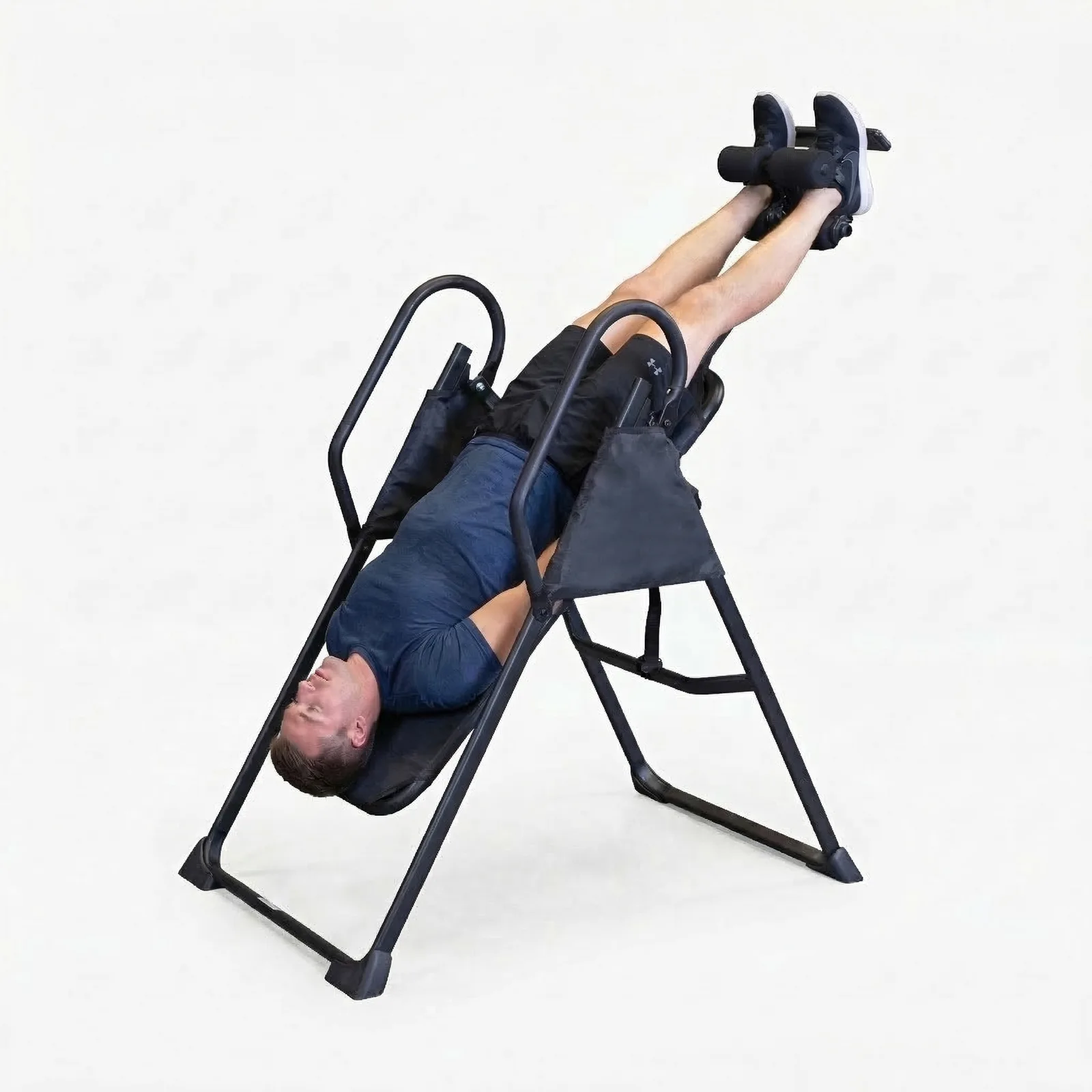
Inversion Tables
Gravity Isn't Precision
When you hang upside down on an inversion table, gravity pulls on your entire body equally. The force isn't directed at the specific disc level causing your symptoms — your lumbar, thoracic, and cervical spine all experience the same generalized stretch. There's no targeting, no monitoring, and no control over which segments receive how much force.
Inversion also triggers the same muscle guarding response that limits every at-home method. Your paraspinal muscles contract in the unfamiliar position, meaning the segments you most need to decompress may receive the least actual unloading. An inversion table can reduce spinal load compared to standing, but it can never achieve the negative intradiscal pressure that computerized decompression produces.
There's a safety dimension too. Inversion tables increase intracranial and intraocular pressure, elevate blood pressure, and are contraindicated for patients with glaucoma, hypertension, heart disease, and several other conditions. Because there's no provider screening, many people use them without knowing they have a contraindication.
Conventional Traction
Same Concept. Different Precision.
Traction is a general mechanical principle — applying a sustained pulling force to the spine to create space between vertebrae. It pulls, and it holds. When that sustained force is applied, your paraspinal muscles naturally contract to protect the area, reducing effectiveness at the targeted segment.
Clinical decompression uses a fundamentally different approach: cyclical loading that is computer-controlled, monitored in real time, and adjusted throughout each session based on how your body responds. If your muscles guard, the system adjusts. If you cough, it stops within milliseconds. That level of responsiveness doesn't exist in traditional traction.
Traction has a role in conservative care and can provide meaningful relief for some patients, particularly within a physical therapy program. But if you've tried traction without lasting improvement, it doesn't mean decompression won't help — the mechanisms are fundamentally different.
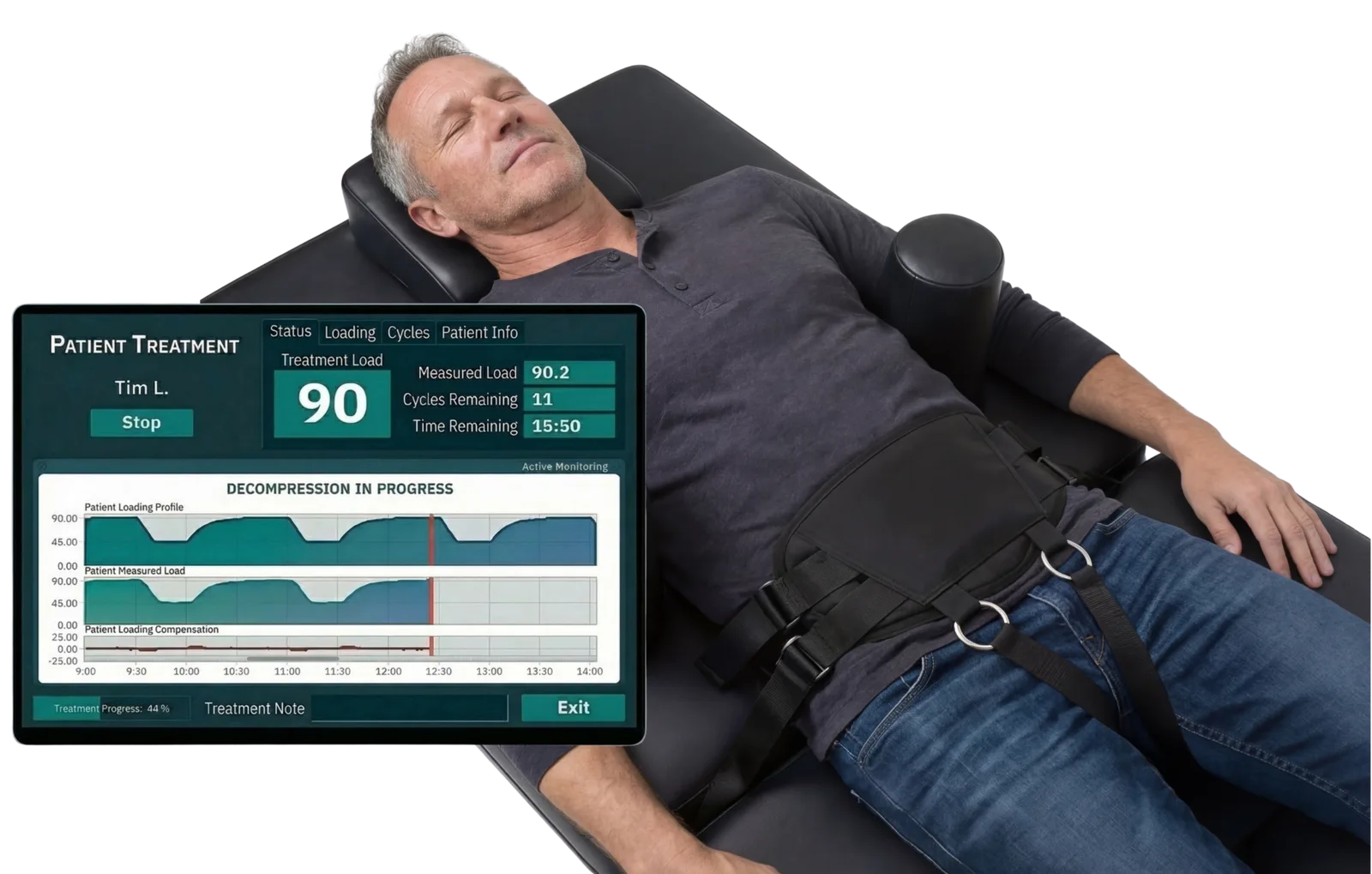
Why These Methods Aren't the Same
Conventional traction and inversion can reduce spinal load — but they never achieve the negative intradiscal pressure that computerized spinal decompression produces. That negative pressure environment is what makes spine-specific rehabilitation fundamentally different.
Traction & inversion
Sources
Nachemson A (1966). The load on lumbar disks in different positions of the body. Clin Orthop Relat Res 45:107–122.
Wilke HJ et al. (1999). New in vivo measurements of pressures in the intervertebral disc in daily life. Spine 24(8):755–762.
Ramos G, Martin W (1994). Effects of vertebral axial decompression on intradiscal pressure. J Neurosurg 81:350–353.
Anderson GB et al. (1983). Intradiscal pressure during traction. Spine 8(2):146–154.
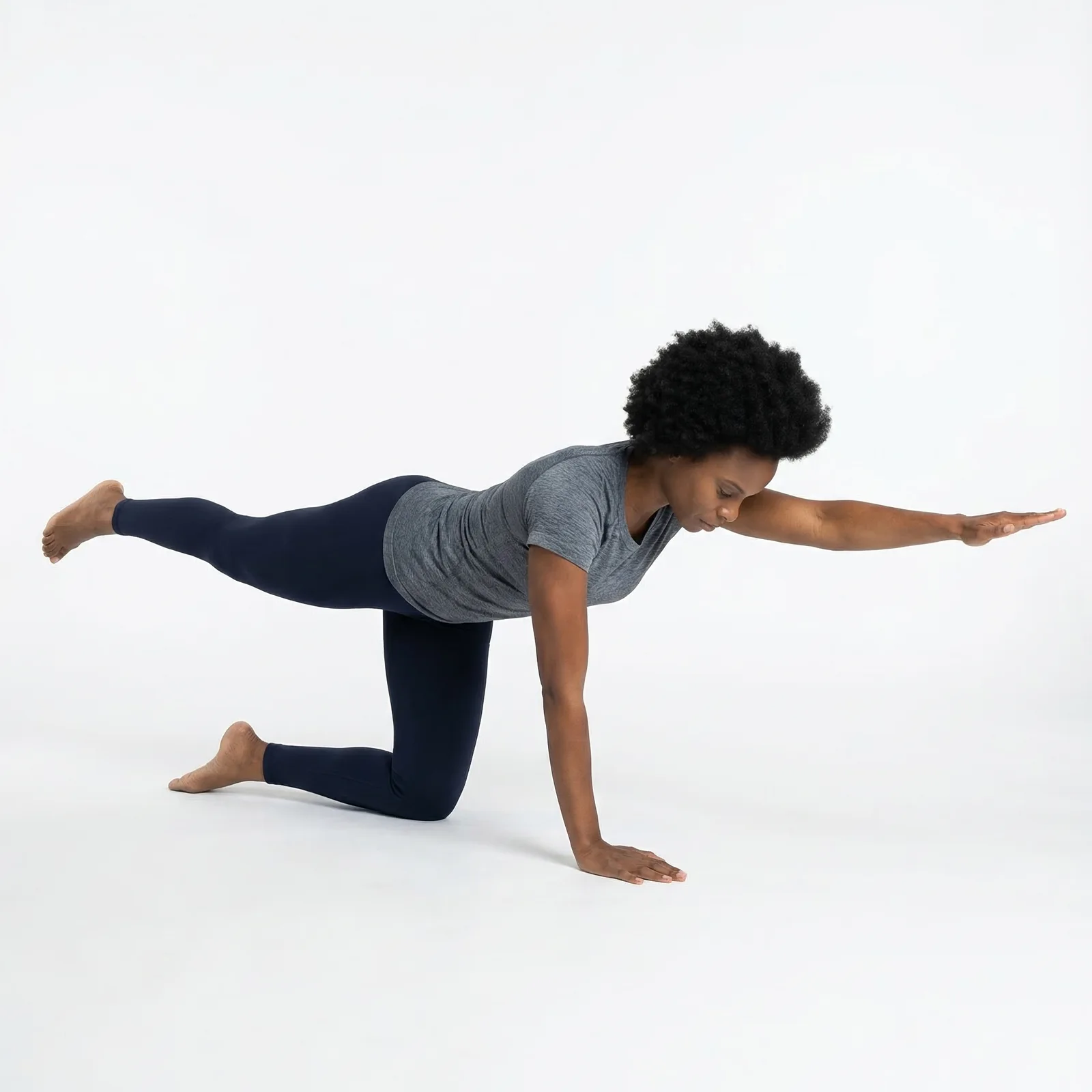
Stretching & Home Exercise
Good for Maintenance. Can't Address Disc Pathology.
Stretching is genuinely beneficial for spinal health. It improves range of motion, reduces muscular tension, supports circulation, and can provide temporary relief from stiffness. For general maintenance and prevention, it's one of the best things you can do for your back.
But stretching acts on muscles and soft tissue. It cannot create the targeted negative intradiscal pressure needed to influence a herniation or bulge. It cannot bypass muscle guarding to unload a specific segment. And it doesn't provide the structured, monitored, progressive loading that drives measurable change in disc height or hydration over a treatment course.
Many providers prescribe specific stretching routines as part of their decompression aftercare — not as a replacement, but as a complement that helps maintain the gains achieved during clinical sessions. The distinction is between stretching as the primary intervention versus stretching as a supporting element in a structured plan.
Home Decompression Devices
Consumer Products vs. Clinical Equipment
Consumer-grade "decompression" devices — over-the-door cervical traction units, inflatable lumbar belts, portable traction frames — are marketed as affordable alternatives to clinical care. They share the word "decompression," but that's about where the similarity ends.
Every published clinical study reporting positive outcomes for spinal decompression uses clinical-grade equipment — systems like the DRX9000, VAX-D, or similar FDA-cleared devices designed for professional use. None of them use consumer products. When someone cites "evidence for decompression" while selling a $300 gadget, they're borrowing credibility from research conducted with entirely different equipment operated by trained professionals.
The price difference between consumer devices and clinical care reflects an engineering difference — not a markup. Clinical systems cost $80,000-$150,000 because they solve the guarding problem through computerized cycling patterns, real-time biofeedback, and segment-specific positioning. No consumer device on the market replicates that mechanical environment.
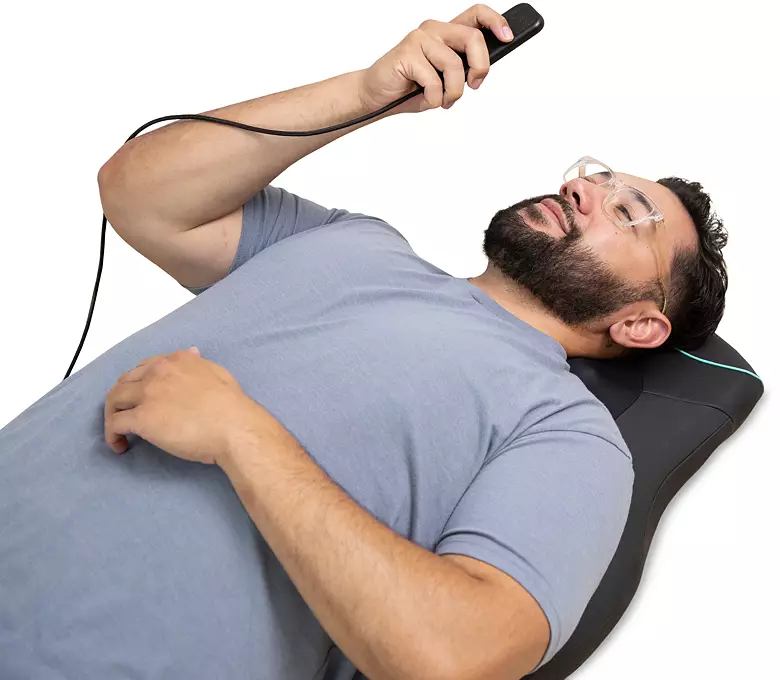
"I already tried an inversion table / traction / stretching and it didn't help. Why would this be different?"
Because the mechanisms are fundamentally different. At-home methods apply static, uncontrolled force that your muscles resist. Clinical decompression uses cyclical, computer-controlled loading on a specific spinal level — working with your body's responses, not against them. If those methods didn't produce results, it doesn't mean decompression won't.
"The risk-to-reward profile of properly administered spinal decompression is among the most favorable I've seen in pain management. No incisions, no injections, no anesthesia — and when it works, the improvement is real and measurable."
— Dr. Robert Odell, MD, PhD — Preferred Provider, Las Vegas & Medical Advisory Board Member
Related Pages


Find a Preferred Provider
Enter your zip code to see if a credentialed provider is available near you.
Why choose a preferred provider?Ready to Find Out If You're a Candidate?
Take our quick 3-minute assessment to see if spinal decompression may be appropriate for your situation. It's free, confidential, and takes just a few questions.
Take the AssessmentGet Started
We've got your info!
We don't have a preferred provider in your area just yet, but we'll reach out as soon as one becomes available.